Wednesday, October 20, 2010

Coping with a brilliant child

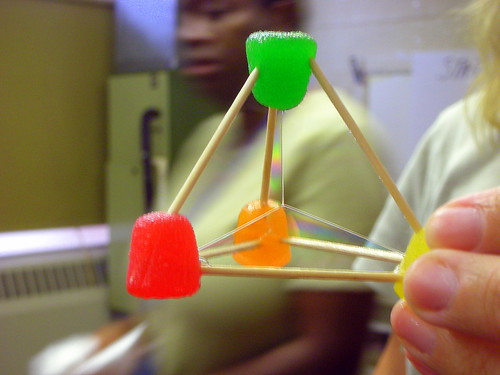
If you've got a brilliant kid, you'll already be well aware of what a fantastic, magical experience it is. Some kids have been known to take apart and put back together cell phones- At age two. Some are very quiet, and will play peacefully until you notice they've created something dazzling. Getting your mind blown on an hourly basis is the usual result. Even toys can become a sort of "bassinet university".


Photo: drewnew

The brilliant kids need Mom and Dad as sounding boards, as much as parents. These kids are very highly focused, and they're limited by what they can access, as kids. You need to show them how to explore their areas of interest. You also need to make sure they can develop their skills naturally, without them getting derailed by too many external factors.

The fact is that talent and intelligence grow better on their own terms. Without the slightest need to push, a child can become an expert on any subject where their intellects are really engaged. You'll find you learn a lot. Talented people, of any age, are excellent teachers, and if you didn't know something about how to build a super computer or raise a giraffe, you'll find your six year old can explain it very clearly.

The needs of a brilliant child

What a really brilliant kid needs is information, and to be able to check their thinking properly. This is important, for skills development.

As a parent, you can contribute a lot, and you'll have a ball doing it:

Ask questions: Not "parent" questions, but adult questions. The child will react to any good question very well. Don't be too surprised if you get a better answer than you'd have given yourself.

For example, about a really great picture:

Don't ask: "Did you pick the colors yourself?", which is insulting, and proves you've missed the whole point of the picture. Ask an adult question instead "How did you decide which colors/what materials to use?"

The idea is that the kid examines their own thinking. You'll get a good answer, too, and you can expect some interesting ideas.


Photo: pedrosimoes7

When you know a brilliant kid is interested in something: Give them exposure to new things in that area, things they haven't seen before. This stimulates further development, saves time for the kid in finding these things for themselves, and allows them to make the associations between simple and advanced things in their areas of interest early. Check out online toys in that field, too, some are excellent.

Access to information: The truly brilliant kids pick things up with incredible speed. If you help them to learn to read and how to get information, and make sure they have the basics, they'll do the rest to a very large extent.

The shy brilliant kid: This type of child isn't some sort of sociopath. They're wary, probably with good reason, of the "kiddies" environment. It's too dumb for them. They can't really associate with these people on any meaningful level, and wouldn't, if they had a choice. Leaving them stuck in "dumb land" is what makes them antisocial later, and who could blame them?

Have fun, and enjoy every second.

Saturday, October 16, 2010

How To Simplify Your Homeschool Curriculum

When you begin to homeschool, you are keen to go to curriculum fairs and search out the perfect homeschool curriculum for your family. When you have been homeschooling for a few years, you may discover that your first choices did not work out that well, and you are on the hunt again. Five or so years later, you may be bored and keen to re-think the homeschool curriculum and cater for your highschool students. Ten years later, you throw out so much of what you have bought and never used and keenly look to simplify your homeschool curriculum.


Photo: localwin.com

I am not sure if you subscribe to numerous homeschooling e-newsletters or ezines (perhaps you subscribe to mine!). I subscribe to a few to find out what homeschool curriculum is around and the see what other homeschoolers may be using. At times, I like to read reviews. However, as my email box is continually bombarded with new homeschool products and resources, I wonder if all the new products have helped our desire or vision for homeschooling. Are we more focussed on the task of homeschooling now with the
plethora of curriculum that is put before us or did those early veteran homeschoolers with limited resources capture the essence of homeschooling in a better way? Have we lost the vision?
Am I against homeschool curriculum? Absolutely not! I am very thankful to numerous publishers who have put time and thought into a product and are selling it to the homeschool market. Thankyou! It has made my task so much easier! However, I am concerned that some publishers are just viewing homeschooling as another market and we are steered into thinking that each child needs to have a textbook for each subject each year! Four children, eight subjects each year means literally 128 textbooks for every year of homeschooling. Most of these will be pricey and consumable.

"What are you doing for Language Arts?"
"DS has a Year 3 book for Spelling, Year 4 for grammar, Year 3 book for Literature Studies, Year 3 text for writing and Year 4 Book for Reading Comprehension. Yes, I am so glad that we can cater for his individual abilities!"

Is this the only way? Are you ready to simplify your homeschool curriculum and not fall into the marketing traps? How can that be done?

If you have spent any time on my website, you would know that I always refer to your educational and family goals. That is the first thing that you need to do now if you want to simplify your homeschool curriculum.
Decide on the big picture goals
Why are you homeschooling? For what purpose and to what end are you preparing and educating your children?
Let these answers drive the curriculum you choose to implement in your homeschool.
Decide why you want to teach a certain subject

Here you should pose questions to yourself which will help you formulate why you want to teach a certain subject.

This step can be quite simple. The most obvious answer as to why we want to teach reading, is, so that our children will read widely and understand what they read. True? How do we do that? Firstly, we set up an atmosphere that encourages reading. We read widely to them; We give them the tools so that they can read for themselves (phonics instruction when ready); We offer a range of quality reading resources - both fiction and non-fiction living books. We include reading in all subject areas and do not treat it as a separate subject, but instead, a skill to be developed in each subject.

The most obvious answer as to why we want to teach writing, is, so that our children can write appropriately for different audiences and in different situations. This includes writing notes, letters, essays, descriptive writing, fiction, non-fiction, responses, critical essays, essays of persuasion and more

So, how would we do that? Does it mean we need a consumable textbook for each grade level? Probably not! If we want to teach our children to write, they need to write! - all types of forms of writing, across the curriculum. Begin by teaching them correct letter formation, writing words, copying sentences, narrations, copying their own oral narrations, essay writing. I would encourage you to get a book which explains different writing forms. I like the Write Source books and have chosen a few age-appropriate teaching texts. These are non-consumable and are written directly to the child.

If you would like to work on writing skills, you could choose an excerpt of literature, discuss the grammar, spelling, sentence structure, word usage and use it as a basis for copywork, and modeling.

Spelling can flow directly from their own writing and an individual spelling list can be created from their incorrect spelling. Spelling in context is far more effective. However, if you would like a Spelling Program, choose one which spans across the ages and years.

If your goal for history teaching is that they memorize dates, you would look for a program that just focusses on memorization of facts, but if your goal is that they gain an understanding of the time period and understand it in the context of a Biblical Worldview, you would look for a curriculum that helps you to do that.

The answer you give for each subject area, will help you choose appropriate homeschool curriculum which has the same purpose in mind.

Source: Free Articles Directory Submission

About the Author
When you begin to homeschool, you are keen to go to curriculum fairs and search out the perfect homeschool curriculum for your family. When you have been homeschooling for a few years, you may discover that your first choices did not work out that well, and you are on the hunt again.

Thursday, October 14, 2010

How Your Child Can Benefit From Reading?

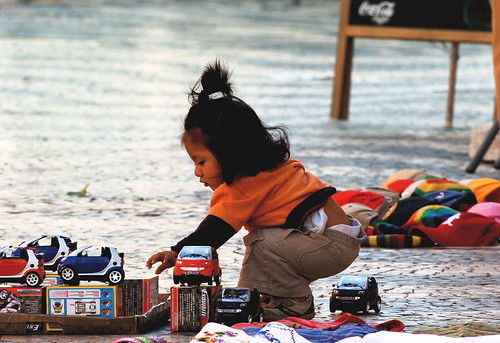
We all know how reading can benefit us both in our personal and business lives. When we read, we learn many things and we even have the opportunity to improve our communication skills although we may not be aware of it. We are exposed to the right usage of language and correct structure of sentences when we read that's why our communication skills are improved. Those who read for pleasure are benefiting from it though they may not be aware of it. For children, though, reading can be a very powerful tool. By having the entire family join a book club, the children can become interested in reading or in books. Kids can benefit from reading in three different ways.


Photo: John-Morgan

Firstly, those who grew up reading books have a higher chance of excelling in their studies and finding great jobs. But we're not talking about occasional readers or comic book readers who are mostly dealing with incorrect or informal usage of a language. We are referring to those who have the opportunity to develop a love for reading so that they actually pick a worthy book themselves and just start flipping the pages without an adult or elder telling them. We are talking about those whou would love to join book clubs or perhaps collect books by themselves. When children are able to develop this kind of habit, they can eventually master written word and eventually sharpen their intellectual abilities as well. There are of course other means to do this but reading is by far the most favored one.

The second is that those children who love reading can learn so many things from the books they choose to read. The subjects aren't limited. These books can include subject matters like those discussed in schools like biology, physics or chemistry. Even reading fiction has its benefits. Reading can open a child's mind to different possibilities about life. Although it would take an actual experience of things to be able to really learn from them, it cannot be denied that knowing about certain life situations ahead in fiction can make us think twice about possibly making such events happen in reality. When children read, they are exposed to different scenarios about life and somehow, when they have to go through such scenarios for real in their own lives, they will not completely new to the situation because somehow, he has gained insights from a good book that he has read.

Third, reading improves a child's writing ability. While it is easy to say that a speaker is a good one just by listening to his pronunciation and delivery, not all good speakers are good writers. There are good speakers but when it's time for them to write, they find it hard to construct good written sentences. But a person who is good in writing, is most probably, good in speaking as well. To improve a child's writing skills, it is important to expose him to the correct and formal usage of language through the published books that he reads. This way, the kid masters the language subconsciously which is, by the way, the best method for learning anything, whether not related to language.

Third, reading improves a child's writing ability. Although a speaker may be judged of how good he is by his diction and his delivery, always remember that good speakers sometimes may not be good writers. There are good speakers but when it's time for them to write, they find it hard to construct good written sentences. Those who are good in writing, however, are most of the time good in speaking. A child's writing skills can be improved by exposing him to correct and formal usage of language through reading published books. The child can eventually master the language subconsciously.

Source: Free Articles Directory Submission

About the Author
We all know how reading can benefit us both in our personal and business lives. When we read, we learn many things and we even have the opportunity to improve our communication skills although we may not be aware of it. We are exposed to the right usage of language and correct structure of sentences when we read that's why our communication skills are improved.

Sunday, October 3, 2010

iPad iBooks: Making Reading Fun and Practical

Apple and software developers have been providing its users effective and helpful applications for their gadgets (iPhone, iPod Touch, and iPad). One of the best applications or features Apple gadgets have is the eBook reader. This way, users are able to develop their literary knowledge and booklovers can boast their virtual bookshelf with the help of the iBook.


Photo: ohjasonj

The ipad ibooks application allows users to purchase any book available from the iBookstore. The app also allows users to create their own virtual bookshelf. The ipad ibooks works just like the iTunes only that it sorts out books. With the said app, readers can freely change the book's font for a better reading pleasure. Once you purchased a book from the iBookstore, it will automatically be added to your bookshelf. You can just pick a book that you would like to read from the list of the books shown in your bookshelf and customize the font and the lighting. With this kind of feature, you will be able to enhance your reading experience.

It takes a brilliant mind or a numerous number of brilliant minds to be able to come up with this idea. Though there is an earlier kind of application that works like this published by Amazon (the Kindle), Apple does not deny the fact that both applications are very helpful. However, due to Apple's advancements in technology, the iBook has a lot more to offer than just sorting out books and arranging them in a bookshelf. Some other features makes reading more fun and easy such as the dictionary feature wherein you just tap the word and highlight it and a search bar or a pop-out dictionary will appear containing a brief definition of the word.

The ipad ibooks has provided a revolutionary way of reading and storing books. It has been considered to be one of the best applications for the iPad that has been published. Its features are very impressive and amazing. However, since the application is just new in the market there are a lot of suggestions for improvements that have been raised by its users and experts that should be addressed by Apple and the software's developers. All in all, the application still deserves 5 stars for providing such wonderful features.

About the Author
Discover The Most Recommended Websites Online To Download Ipad Ibooks. Visit Ipad Ibooks At http://www.i-padibooks.com

Tuesday, September 21, 2010

Sustainability and design philosophy- reinventing the message

Designers are a strange breed. They're true believers in the power and values of their medium. They're also pack mules for often bitsy, pedantic work which involves attention to detail and structure on a scale few other people could approach. When another concept bumps into the design philosophy, it has an uphill battle proving its credentials to people who can literally take apart ideas as they read them. Sustainability, a blanket term for a process, has been picked up by designers very quickly. They appreciate the holistic approach in sustainability as much as they appreciate good injection moulding techniques.

injection moulding

Sustainability is in fact a design process by nature. The concept starts where good design starts, and source, and follows through to a clearly defined end product. That's textbook design best practice, and it's making a lot of sense to designers looking at product cost factors, life cycles, and the other parts of design few people even know exist.


For a while, it seemed as if sustainability's status as a buzzword was a major turnoff to professional designers. Buzzwords mean precisely nothing to designers, particularly when they come out of the mouths of politicians, lobbyists, and spin doctors. Fortunately, the practical values of sustainability struck a real chord with the top professionals.

The instant attractions were found in the designer's version of the supply chain, the extremely demanding product costing and design cycle number crunching which makes the difference between a competitive design and a nice try. Sustainability, and the ability to show a design product with far lower overheads and savings in production processes has turned out to be a real winning combination exactly where designers need winning combinations.

The link is in materials and materials quality. Designers don't like shoddy materials, and they don't want their names on the Easy Break – Kiddies Death Trap toys or the Certain Death Toaster. They naturally prefer to source materials where they can see clear quality values, because they know what happens if they don't. Sustainable materials produce a list of specifications which is now a benchmark for design standards.

If you want design value information down to the molecule, the sustainable materials have them. Even more usefully, the sustainable concept brings with it real critics who know what they're talking about and set meaningful standards on sustainable practices. Designers, who understand the materials process better than almost anyone else, have found a sort of soul mate in sustainability's primal demand for realistic performance.

Reinventing the message

Sustainability can help designers explain basic design principles to the world. Designers have been trying for years to establish the basic principles of design efficiency and quality in a world dominated by delusive point of transaction "savings" using dismal materials.

The message misses the cash register, unless you can show strong values from the production points. Sustainable product cycles can demonstrate all these values literally from the trees and reclaimed/recycled materials, right through production, sales, and recycling. Sustainability provides a spreadsheet as much as a philosophy.

Sustainability fits design philosophy and practice like good plastic moulding. The clients who understand sustainability in practice will understand design philosophy.


Sunday, September 19, 2010

How To Teach Your Children To Read

You can start teaching your child the building blocks for reading before they ever step foot in a classroom. Once your child enters school, you can work with your child and their teachers to help aid the learning process. Teaching your child to read will involve dedication and patience.


Photo: John-Morgan

Make reading an important part of your child’s life before they can even speak. Read to your child as they develop in the womb and when they are babies. When your child is ready, start to read out loud to them while they follow along by looking at the pictures. You can then start to point out words in the book to your child while you read their favorite stories.


Read your children books with rhymes as well. The rhymes are easy for your child to remember and as they grow older they can learn to recognize some of the words in their favorite rhymes.

Start to introduce your baby to the alphabet from a young age. When your baby is just a couple months old you can start singing the ABC’s song to them. Between twelve to eighteen months, your little one will start to sing parts of the song on their own. A few months after that, you can start showing them the letters of the alphabet on a chart as you sing through the tune.

Start to demonstrate the sounds made by each letter of the alphabet when your child reaches preschool age. Take your time teaching them all the sounds that the letters of the alphabet will make. After your child starts to comprehend the various sounds made my letters of the alphabet, you can start teaching some basic words. Take each letter of the alphabet and teach your child common words that start with that letter. Write out the words for your child to see. Search for these words in your child’s books to show them how the word is written. In time, your child will begin to recognize basic words. (Some examples of words you might want to start out with include: apple, bat, cat, dog and hat).

Teaching your child to write will also help to aid in the learning process for reading. Teach your child to write the letters of the alphabet first. You can buy practice books that start out by having children trace each letter before they try to write letters on their own. When your child has mastered the alphabet, they can begin learning to trace and write simple words such as: dog, cat, bat, ball and top.

When your child is ready to start trying to read a few words on their own, buy some basic books. The books should contain words that follow the basic rules of phonics. Words that deter from the average phonics rules will be difficult for your child to recognize at first until they learn to spot and identify these words.

As your child starts to work on reading and writing in school, be actively involved in the process. Help your child with their homework. If your child is struggling, talk to their teacher to learn further ways to help your child learn to read. Spend time reading with your children each night.

Source: Free Articles Directory Submission

About the Author
You can start teaching your child the building blocks for reading before they ever step foot in a classroom. Once your child enters school, you can work with your child and their teachers to help aid the learning process. Teaching your child to read will involve dedication and patience.

Thursday, September 16, 2010

Benefits of Early Math Education

The benefits of early math education is a neglected topic. There are many initiatives in place to foster language and reading, while math has been overlooked. Part of the problem is that many of the people who go into the early education field are not fond of math themselves. The benefits of early math education are far reaching though and cannot be ignored.

Math Education
Photo: Old Shoe Woman

Indicator of Future Success
Studies by the Society of Research in Child Development report that a child’s knowledge of number concepts when they enter school is a good indicator of future success. This information should encourage all parents and educators to introduce math at early ages.


Naturally Curious
Children are naturally curious. They are interested in just about everything, using this trait can allow for wide strides to be made in mastering number concepts at a very young age.

Build Confidence
Understanding numbers, shapes, colors, patterns and counting at a young age builds confidence. Knowing how to manage the items in their world creates a sense of ownership with their surroundings, as does learning the lingo. Being able to decipher the language of math and relate it to themselves is an important building block.

Capable
Children are capable of learning deeper math concepts than usually assumed. Given the opportunity to learn math skills at a young age builds necessary connections in their spatial awareness. Everything in math is both concrete and abstract, learning these concepts takes time to develop and mature. Early exposure allows the mind to process the skills needed to proceed.

Easily Incorporated
Luckily introducing math at a young age isn’t difficult. Chatting about putting one sock on each foot or asking them to hand each person at the table one napkin easily introduces the concept of one to one correspondence. Learning to count is one thing, learning how numbers relate to concrete items is another stage in their development.

Helps in Language Development
Activities to develop math skills, also promotes language and literacy skills. Increasing the vocabulary needed to process math helps children discuss their world. These skills are highly necessary when they start to read. Knowing numbers, shapes, “more than” and “less than” gives them a new way of telling and understanding stories.

Progressive
Math builds on a set of knowledge, each concept relating to skills the children already have. Progressively learning at an early age, can side step failures due to gaps in knowledge. Those gaps are what makes many children give up on math in later years.

Ideas to Introduce Math at an Early Age
Many of these activities need little to no preparation. Learning happens all day for a young child. Make the most of the in-between times, errands and daily chores. Incorporating math concepts is easy, but remember to keep the conversations light hearted and matter of fact. Forcing math is a good way to turn them off to learning.

Knowing Numbers
Count everyday things while you go about your day. Learning that numbers are symbols that stand for something concrete is a huge leap in knowledge. Counting becomes more than words to song.

Let them play with number magnets. Teach them the names while they are holding them up. Eventually ask them to show you a certain number. Writing numbers at a young age is more art than math, but it’s good for their fine motor skills. Squeeze in counting during their playtime; ask how many crayons they have or how many blocks are in their tower. With enough counting experience, children learn that five blocks are five blocks no matter how they are stacked. Play a game, like asking them to hop 4 times, or see if they can take 10 baby steps. This is fun and passes the time while waiting for an appointment.

Matching
Equal and not equal are important concepts in math. Have children help match socks, or coins. Play dominos, there are lots of preschool versions out that might be more fun than the traditional set.

Have them copy your facial expression
Make a block tower and have them copy it Play an easy game of concentration, use shapes and fewer cards to start

Classifying and Sorting
While matching concentrates on what is alike, sorting focuses on what is different. Have them sort their dolls according to size, or put their cars in groups according to color or type of vehicle.

Try sorting by their rules. Give them a pile of shells or buttons to sort and see what they come up with.

Play sorting games in the bathtub. See which toys float and which ones sink.
These skills are so basic to adults that it is easy to forget that we ever learned them. Developing these fundamental skills through play will help children progress much faster in both math and literacy.

Source: Free Articles Directory Submission

About the Author
The benefits of early math education is a neglected topic. There are many initiatives in place to foster language and reading, while math has been overlooked. Part of the problem is that many of the people who go into the early education field are not fond of math themselves.