Friday, February 4, 2011

Save Time -Buy Children's Dancewear Online

Children's dancewear is seen in everything from music videos to ice skating competitions. It is seen in dancing with the stars type shows on television to clubs and from Halloween costumes to circuses. These are varied venues but they all have one thing in common: children need dance wear too.

Girl Dance wear
Photo: rolands.lakis

Once upon a time everything had its place and in that place was the proper wardrobe. No one would dream of wearing pajama bottoms to school or they'd be sent home to change. Celebrities appeared on television properly clad. Ballerinas wore tutus and the military wore combats. Once upon a time club wear demanded, if not formal, attire that suited the locale. But times have changed and the lines of acceptability have blurred.

Today's child wears pajama bottoms and combats to school. Celebrities are admired no matter their state of dress or undress. Dancewear for adults and children's dancewear are acceptable threads at school, on the street, in the clubs and on some jobs not requiring a uniform look.

Dancewear isn't just about the tutu. It's about bras and undies, T- shirts and hoodies, warm-up pants and shirts. When you pass children on the street sporting children's dancewear, this is what they're about and it gived them style and individuality. Often, comfort and what suits the individual or what looks good on them is what they wear to dance and as they are comfortable and feel they look good, their dance is superlative. If you check the history of the dance, you see that the style of the time was adapted by the dancer to not only fit and look good, but to incorporate into the dance his or her interpretation of the story.

Since times have changed and anything goes, have some fun shopping online for children's dancewear. Choices abound online that won't fit on a sales floor in the high street store. It takes less time to shop online. Children's dancewear now includes dance shoes in sneaker-type designs which can be used for street wear. Jazz shoes come with rubber soles, for instance and ballroom shoes could conceivably be worn to the office or a country music line dance. The uppers come in a variety of colors and materials like canvas and leather.

From warm-ups to dance pants and from body warmers to dance tops, today's fashions in children's dancewear are hip and attractive. The choices are limitless. They come in polyesters, cottons, Lycra. They come in matte and shiny textures, sequined and metallic. They come in street wear and formal dance attire. They come in Latin, as well. There are flamenco style dresses, sexy dresses and short dresses. They are red, blue, green, black, lacy, scalloped and scooped. They are short as a tutu or knee or calf or full length. They are skin tight sheaths or full skirted. They are flirty, fun and 'dancey.'

Once upon a time dance wear was purchased from a specialized shop. Life, however, is lived online now. Have some fun creating the dance with more choices in less time.

About the Author
Look good, feel good, perform better with clothes from Dance Clothes UK . We have dance shoes and a wide range of Children's Dancewear. Visit http://www.danceclothesuk.com for more information and great children's dance clothes.

Monday, January 24, 2011

Using play to teach your toddler

Often when we talk about homeschooling we think of children of school age who receive their education at home instead of in a school. But we often forget that even before children are old enough to go to school, they are still being educated through the games and toys they play with, and the activities they do with their parents and siblings. So even though not everyone ascribes to home schooling for older children, you still need to provide a certain kind of education to those too young to start school. This article will delineate the main areas of development, and some ideas for activities and toys for each.

toddler
Photo: cool-kids-rooms.com

The keyword for children this age is creativity. Have you noticed how at Christmas or a birthday, toddlers tend to enjoy boxes more than the thing it contained? It’s because toddlers are able to use their imagination to pretend that the box is something else -- and the box enables them to change the scenario as many times as they like. Toddlers like to move and be active, so make sure that the play area and the toys are free of sharp edges, and that they are safe to be in contact with the body (as children up to 4 still put things in their mouths). Make sure to supervise at all times, and especially closely when they play with crayons, chalk and paint.


So one area to develop is their body coordination. Big toys such as tricycles, playhouses and activities involving music and mime are perfect for this. For the younger ones, stacking games are especially good. You also want to help develop their fine hand coordination with games involving manipulation of pieces like bead puzzles and other toys. Drawing on a chalkboard or on paper also helps with this, and as they grow older they can hold smaller and smaller pencils and crayons.

Children this age love to play make-believe or pretend games, otherwise known to us as roleplay. Make sure that you give them grow-up clothes (as long as they are not dangerous) and do not impose gender roles on them. Boys can dress like mom, and girls can dress like dad; this is important for their understanding of the gendered world around them. Provide costumes and opportunities to play pretend as much as possible. Help them put on plays or their own TV show, play mommy along with them. You’ll see them come up with ideas you never imagined! This is part of their creativity development.

The last but not least part of their development is their literacy development. When your toddler asks you for a definition, give it as simply and honestly as you can. Read them stories and show them that words can be written down as well. You will see them try to write words down in their own language: that is a sign that they understand the concept of the written word. Encourage them to learn letters and numbers. Quiz them during the reading of their favourite book. Tell them to tell you a story and write it down as they go, so that you can read it back to them later.

As you can see, there are many possibilities to teach your toddler and to prepare them for school life (home or otherwise). Online toy stores are good if you can’t find what you need at your local toy store.

Wednesday, January 12, 2011

Homeschooling Without Homework

Today, an ever-increasing number of families are involved in homeschooling, which has emerged as a novel method to teach and impart education to children at home. Home schooling provides many benefits to the parents as well as children. In the early years, homeschooling was the only method to teach children, as there were no schools.


Photo: improvingyourworld.com

Homeschooling does not lay any kind of pressure on the child. He/she does not have to prove to show their abilities. Parents too get the opportunity to understand their child better with homeschooling. They can plan accordingly after due consideration of their strengths and weaknesses. Moreover, an individual child could be given more time to complete work, if he/she is slow in performance. A homeschooling child shows a positive attitude towards life.


Is it possible to homeschooling to do without homework? Usually the time is not the factor in homeschooling, but what matters is how much the child is able to grasp from the lessons. If there were a pressure of homework to be done, your child would not study in a comfortable and relaxed way. One of the biggest advantages of homeschooling is that your child is learning not under any kind of threat. So, to apply any kind of pressure to do his homework in a better way would confuse the child. Homework may be necessary in a formal school. Homeschooling by itself does not require any homework to be allotted, since the fact is the child is already homeschooling. What is necessary is to find out what is lacking in the child and how much knowledge does he have. Instead, you could design such a curriculum, which would contribute to your child's productivity.

Parents have the freedom to incorporate the child's interest in religious learning, but at the same time, one should not avoid to teach the curriculum subjects. In the school the children may waste time simply by waiting for others to finish their work or the recess time could be a waste. All this is avoided, while
homeschooling.

A child also feels more comfortable studying at home without the pressure of any homework to do. It may happen, sometime that a child is scared about a particular teacher and is unable to express his views or point, which he would otherwise freely do at home or in any given friendly environment. Sometimes, the child may loose confidence, when he notices that he is not as smart as other pupils are in a formal school. In these perspectives, homeschooling is better than to go to school.

As far as homework is concerned, you have to focus on the process of learning rather than expect homework to be the fast and effective output from your child's end. Since your child is not going to school, you have to understand what is going in his heart, while doing the assigned task. Sometimes it does happen that your child may seem to be happy just to finish his tasks and offload the burden to finish his homework quickly. But this may just be a fact to express his views and disgust by doing the homework. This may inculcate a head strong personality in him. So you have to go for a slow process to understand his psychology and take the right step accordingly.

But, sometimes you need to assign your child with homework, which he should do happily and without fear of pressure. So, a child who is homeschooling should grow with a positive attitude towards life with an in depth knowledge, because he should take his studies not as a burden, but to enjoy it and have fun with his family too.

As said above homework in itself is inherent in homeschooling. There is nothing like homeschooling without homework.

About the Author
Today, an ever-increasing number of families are involved in homeschooling, which has emerged as a novel method to teach and impart education to children at home. Home schooling provides many benefits to the parents as well as children.

Thursday, January 6, 2011

Advantages and Disadvantages of Home Schooling

Education is an important matter for the existence of a human being. He should know about his fellows, nature, Culture of nations and lifestyle and health related matters. All of these can be achieved only through education. So it's one of the important matters to be considered with. There are many ways for gaining knowledge. You can get knowledge from reading books, from their own experience and many more ways. You can approach a teacher so that you can get the answers of all the questions you have in your mind. For this you will have to go to school. However, many of us do not prefer to send their children to schools. They prefer to give home schooling with the help of a tuition master.


Photo: surlygirl

Home schooling is not easy as you believe. So in order to make it easier they do it with the help of some schooling groups. When the entire schooling groups meet together they get better schooling with the children and make parents satisfied. Therefore homeschooling groups should do some public relations for developing their community relations.


So if you are in place where there are no schools nearby then you will have to develop your own schooling details for schooling curriculum. You can gain knowledge from lots of books and resources available. You can get these from a local library and from online shops. Once you have selected a curriculum pattern, then you will have to decide the leeway you require for following that curriculum. Home schooling has some advantage in which one of them is to make your child interested in some topics and help them to increase their curiosity to know.

Besides conventional methods, you can make use of homeschooling by online programs. Many of the schools are offering these facilities. This has some advantage because the school will check the benefits your child is getting from the scheme. There will be a monitoring in every single path of your child. They also provide the correct study materials for gaining knowledge. Your children can learn things in which they have the interest. Furthermore, they can grow their own skills and abilities.

In the past years home schooling has a wide spread popularity. This is because of some of the advantage factors of home schooling. Closer relationship in family is also possible by home schooling. It has become legal in many of the nations around the world. However, still there is some opposition against home schooling. If a debate is being conducted, then there will have points against and supporting home schooling.

Parents will have to think about the disadvantages of a program while considering about the benefits. There are some factors of social relationships and behavioral patterns that should be taught to children. How this could be possible if the children do not interact with friends. Hence, sometimes parents make their child dummies ignoring the fact that they will have to learn more with the interaction with the world.

This is a full article which also published at article directories. Read more articles please visit ezinearticle.com.

Thursday, December 30, 2010

Patch blues -- Getting some traction out of your loops

Anyone who's ever used patches knows that they come in a range of types, from truly uninspiring to highly adventurous, interesting ideas. Getting them to work, however, can be a labor of love. Whether you're working in a nightclub gig or trying to get some sense out of your equipment at a club, some patches don't cut it and some do. Depending on your style, some are suitable and some aren't, and the people who put these patches together sell them like garage sales. You can get whole batches of patches, useful or otherwise, even from some major distributors.


Photo: Ianz

The issues
The problems tend to be:
Tinny, useless, things that really don't work or mysterious things that sound "wrong" when they're in your sound system

This is a result of not matching patches to signals. Sounds send power signals through amps at different levels, and that can create loop issues in a mix. The things that don't work don't send the right signals for your system. They lose power, and if they sound great on the systems of the people who made them, your sound system isn't picking them up.

For loops, that's potential murder. It can be more trouble than it's worth to create a good loop and then have it buried. The loop track has to struggle through the signals. If you've heard mixes where things seem to have been shoved into the background, and those are loops you're listening to, that's how that happens, particularly in woofer-heavy mixes.

The solutions
Top and bottom are naturally separated in good mixes, and you'll hear a lot of stuff online and elsewhere where they've obviously been recorded and mixed separately to avoid this result. That's basically what you need to do. There are several options:

1. Focus on creating strong loops from scratch: Use your own sound mixing software on your own sound system. (Note: Musical key detection using the mixer isn't a gimmick. It drastically improves sound quality and signal quality and really will solve problems.) These things are bulletproof, and they can stand on their own two feet. They only use one or two tracks, so you can run them through your sound systems easily.

2. Dedicated mixing routines- This is fussy work, but if you're prepared to do it, it'll work well. Separate the outputs from your treble mix materials and your woofers. Synchronize your outputs through the mixer, and the loops will be fine.

3. Check your inputs systematically: If you've got sound bugs, one or more of the inputs is the problem. Go through each one, starting with the woofers, and adjust. Use your controls to get the signals properly mixed, setting up a trustworthy balance.

4. Rehearse your mixes: Never mind "All right on the night", you need to sizzle, sparkle and shine, and dud loops caused by mixing won't do that. Find the patches that are causing the problems before they find you explaining things to pubs or other gigs.

Thursday, December 23, 2010

3 Reasons You Should Invest in Help Desk Training For Your Staff

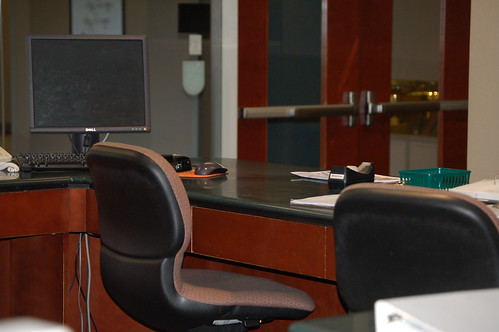
The Help Desk is the default first option call for internal and sometimes external clients. The Help Desk is the most visible, and often the busiest, area of IT frontline support. It performs a critical ongoing service across any organization. Help Desk functions are so important operationally that they're built into major ITSM (IT Service Management) methodologies like ITIL (Information Technology Infrastructure Library) as structures for IT management.

Help Desk
Photo: Walker Library @ MTSU

IT Help Desk fundamentals
It's rarely appreciated by people outside IT exactly how much balancing of priorities and resources is involved in Help Desk functions. The IT Help Desk is usually viewed as a one stop shop for all problems. Issues can range from "My computer isn't working" to "We've lost all our accounts data!" in a few minutes or seconds.

This menagerie of situations, which is usually continuous, requires very efficient management. It also requires high quality training to instill the necessary knowledge and understanding of issues involved in Help Desk work.

Time and space are big issues for Help Desks, requiring real time solutions and good organization of functions.

Priorities can change rapidly, for example:
  • "My computer isn't working" is a local issue, easy to fix even in a worst case scenario.
  • "We've lost all our accounts data!" is a high priority, critical organizational issue requiring an immediate response and quite possibly extensive, time consuming IT support work at the expense of lower priority jobs.
The ability to understand and manage IT support issues effectively has to be learned. Help Desk staff must be trained to a very high standard to deal with this shifting set of issues and manage their time and work productively and efficiently.

Return on Investment in Help Desk training
Training defines the core capabilities of any organization in any role. IT training, particularly for Help Desk roles, is absolutely vital to ensure organizational efficiency. The better trained the Help Desk staff, the better and more efficiently IT services will operate.

Help Desk Training
Photo: jisc_infonet

For organizations, the returns on investment for Help Desk training can be truly excellent. An efficient Help Desk doesn't just respond well to issues. It can also anticipate them, and cover multiple areas of IT support including upgrades and similar functions which prevent problems. A well-trained Help Desk can also manage hardware issues, change and growth seamlessly.

Levels of training required to achieve this level of efficiency requires formal industry training and high quality benchmark qualifications like ITIL Certification. International standard ITSM certifications are rapidly becoming extremely important as the global economy and New Economy business modes impose increasing diversity and demands across the spectrum of IT functions.

Training for the future
Help Desk training is very much an investment in the future. Help Desks need to be able to deal with regular change and manage new systems and their business applications efficiently. The ITIL training, for example, provides a full suite of skills covering the entire gamut of IT operations, with an integrated approach which enhances overall IT management. This training is a long-term benefit, designed to provide much higher value operational capacity for any organization.

Saturday, December 4, 2010

Education Needs Learning Outside The Classroom

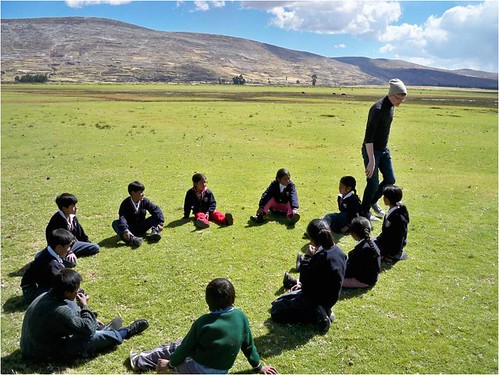
The learning time in a classroom is limited. Operational constraints can reduce the core teaching time to around 30 per cent of the lesson length, but outside the class children see the practical reference point to their learning that increases the absorption rate. A biology game played in the open can reveal the difference in the size, shape and seed dispersal techniques of trees.


Photo: One Laptop per Child

Arguably so can a text book, the difference is the tactile nature of outdoors learning combing the feel, touch, smell and relative size of the subject and its association with its surroundings. Peter Carne, a former geography teacher with a passion for hands-on practical experience and a champion of “learning outside the classroom” says “Education in more than the acquisition of knowledge. Learning outside is a vehicle to develop the capacity to learn”.

There are some limitations. Planning a trip for 30 excitable children takes some organization which can sometimes limit the effectiveness. This is where parents can give great support or even take the lead role. Letting 30 children en masse see the inside of a synagogue, mosque or chapel needs tenacity and diplomacy. A parent and child combination introduces greater flexibility. The educational bond developed can turn the process of exploration into an educational game that supports progress back in class.

History, science, biology and geography are obvious choices for practical learning through parks, museums and theme parks. But maths? I recall a class trip to Wandsworth library in London when I was 9. Learning about the reference system and book indexing before ISBN coding still holds memories. But the highlight of the trip was on the way back. A quick detour to the engineering company next to the school had us enthralled. Our teacher commenced to yank out strands of our hair to play a maths game. The slight tear reaction – a little biology, psychology and more than likely now socially illegal the process produced the samples he was after. Using a micrometer the engineering manager measured the thickness of each strand in thousands of an inch – pre metric days. We queued delightedly to suffer the anguish of the hair tug and record the result. Back in class, the realisation that black hair was on average thicker than blonde. An educational game with a lasting memory, it happened 50 years ago.

Turning a trip out with mum and dad into an educational game is both great fun and mutually rewarding. The practical investigation and the relative knowledge gained help significantly back in class. The fact that the experience was gained outside the classroom provides a strong memory tag association when it comes to exams. What better way to appreciate the scope to the planetary system than look at the physical size of the Jodrell Bank telescope needed to study its detail? Marvel at engineering feats such the Thames barrier and question what could happen if it wasn't there, or see history in operation at the Beamish working museum. Whilst teachers need further encouragement, and time, to take the lead role wherever they can, the time spent in school only amounts to 195 days per year. The remaining 170 days, or using a little maths game; 47 percent of the total year are weekends and school holidays. Parents take note.

About the Author
The learning time in a classroom is limited. Operational constraints can reduce the core teaching time to around 30 per cent of the lesson length, but outside the class children see the practical reference point to their learning